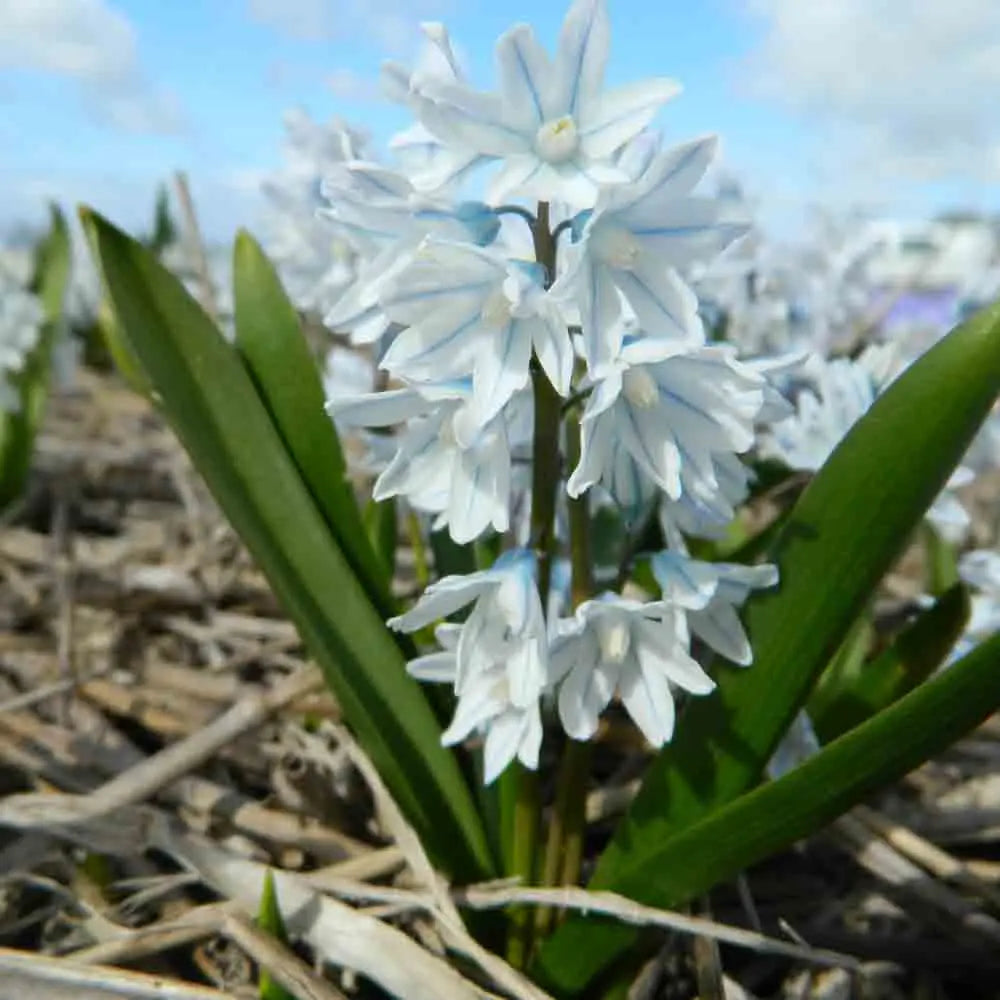
PUSCHKINIA SCILLOIDES LIBANOTICA
Puschkinia Scilloides Libanotica
 Floraison
Caractéristiques du bulbe
Cycle de vie : Vivace
Calibre du bulbe : 5/+
Emplacement : Massif, bordure, sous-bois, gazon, pot
Conseils de culture
Description
Puschkinia scilloides var. libanotica (also known as Lebanese Puschkinia ) is a small perennial bulbous plant that belongs to the Asparagaceae family. It is highly prized for its delicate flowers and its ability to add color to the garden at the first sign of spring. Here's a detailed look at this particular variety.
Uses:
- Ornamental Garden : Thanks to its small size, this puschkinia is perfect for rockeries, borders, or planters. It can be planted in groups for a more dramatic effect or used to fill empty spaces in early spring. It is also ideal for natural or wild-style gardens.
- Understory Plant : Because of its ability to flower before other plants come into bloom, it can be used under deciduous trees or shrubs, where it will provide color and vibrancy before other plants take over.
- Group planting : Pushkinias are usually planted in small clumps or groups to create a beautiful carpet of flowers. You can combine them with other spring plants such as crocuses or daffodils for a colorful effect.
Quelle différence entre le puschkinia et la scille ?
Le puschkinia est plus pâle, presque blanc, avec une fine rayure bleue sur chaque pétale. La scille de Sibérie, elle, est d'un bleu franc et uni.
Le puschkinia se naturalise-t-il ?
Oui, très bien : il se multiplie par bulbilles et se ressème seul. Les colonies s'élargissent d'année en année.
Combien de bulbes faut-il planter ?
Au moins trente à cinquante par groupe. Sa petite taille exige le nombre pour créer un effet visible.
Peut-on le planter dans la pelouse ?
Oui, c'est l'un de ses meilleurs usages. Retardez simplement la première tonte jusqu'au jaunissement complet du feuillage.